 EN

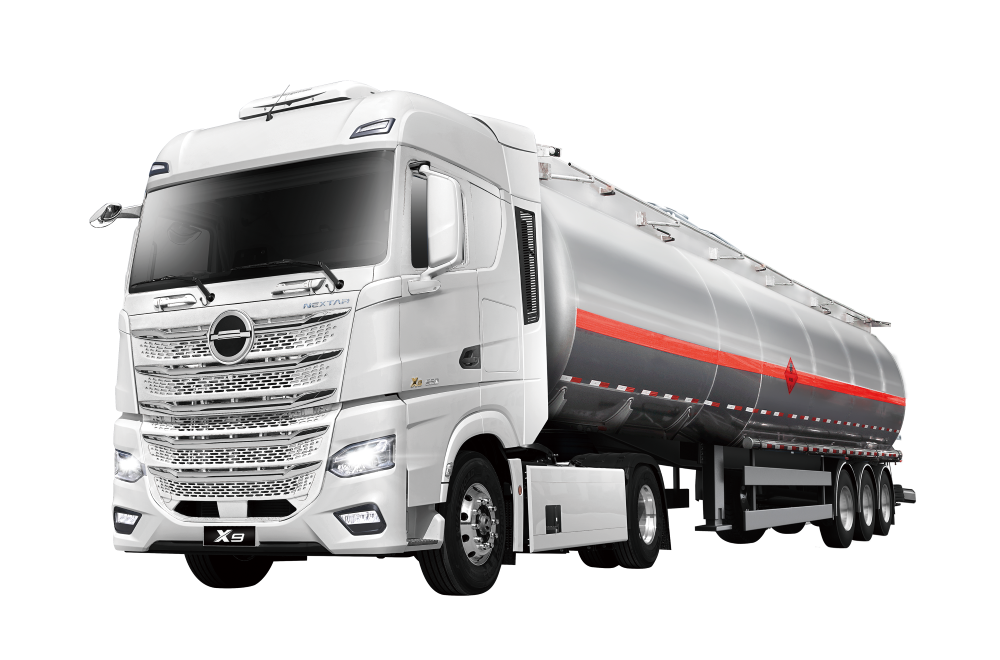
Special Vehicle Applications Across High-Stakes Global Industries
Special vehicle deployments in oil and gas, utilities, construction, healthcare, and cold chain logistics address operational demands that standard transport cannot meet. The global specialty vehicle market is projected to reach USD 131.35 billion by 2031 (King Research, 2024), reflecting rising infrastructure investment and stringent performance requirements. These high-consequence sectors depend on purpose-engineered mobility to preserve safety, uptime, and cargo integrity—where failure carries unacceptable human, financial, or regulatory cost.
Oil & gas, utilities, and construction: Mission-critical mobility in extreme environments
Operations in remote extraction sites, mountainous grid corridors, or large-scale construction zones impose severe stress on vehicles. A special vehicle built for these roles must deliver reliable off-road capability, corrosion resistance, and load-bearing strength far beyond a modified pickup. Oil and gas crews rely on trucks with sealed drivetrains, reinforced undercarriages, and high-ground-clearance suspension to cross desert dunes or permafrost without breakdowns. Utility field teams require mobile workshops capable of carrying transformers and cable spools over unpaved paths—often in sub-zero or tropical conditions. Construction logistics demand water-tank trucks, concrete mixers, and telescopic handlers engineered for rough terrain and repetitive heavy-duty cycles.
Across all three segments, downtime cascades into cost overruns and safety incidents. Purpose-designed special vehicles minimize that risk by matching chassis, tires, and auxiliary systems to exact worksite profiles. Modern telematics integration enables real-time monitoring of engine health and location, allowing fleet managers to pre-empt failures and optimize dispatch across dispersed assets—establishing a true mobility backbone for critical energy, power, and civil infrastructure.
Healthcare and cold chain logistics: Life- and time-sensitive specialized transport
Healthcare and cold chain logistics depend on special vehicle platforms that maintain precise environmental conditions while withstanding the rigors of rapid-response delivery. Mobile medical units convert standard chassis into fully equipped clinics—carrying diagnostic imaging systems, surgical lighting, and climate-controlled drug storage to disaster sites or underserved regions. Organ transplant vehicles feature shock-dampened interiors and redundant power supplies to protect fragile biological cargo during high-speed transit.
In parallel, pharmaceutical cold chain operations require refrigerated trucks that hold temperatures within narrow tolerances—typically 2–8°C for vaccines and biologics—regardless of external weather or road vibrations. A single excursion outside this range can degrade millions of dollars’ worth of products and compromise patient safety. Advanced telematics combined with multi-zone temperature loggers now provide continuous audit trails and instant alerts, enabling proactive intervention. The growth of cell and gene therapies—which demand cryogenic shipping at −150°C or below—is pushing design toward liquid-nitrogen-cooled containment systems and battery-backed active refrigeration. These adaptations ensure every mile preserves therapeutic value, directly supporting global health outcomes.
Strategic Customization: Balancing Standardization with Purpose-Built Special Vehicle Solutions
Enterprises operating in high-stakes sectors often find that generic commercial vehicles cannot meet the extreme demands of their core tasks. A purpose-built special vehicle closes this gap by integrating mission-specific engineering from the ground up. The following sections examine why standard models fall short—and how modular approaches now enable both customization and fleet scalability.
When off-the-shelf fails: Drivers for mission-specific special vehicle design
Off-the-shelf trucks and vans are engineered for broad market averages; they rarely survive prolonged exposure to corrosive chemicals, arctic cold, or continuous 24-hour duty cycles. Field data shows that unmodified light commercial vehicles in mining operations have a mean time between failures of under 3,000 hours, whereas a special vehicle designed with reinforced chassis and sealed electrical systems can exceed 15,000 hours (Mining Equipment Reliability Study, 2023). Regulatory factors further drive customization: mobile medical units must comply with health authority sanitation standards, while explosive atmosphere certifications (ATEX) compel oil and gas fleets to specify spark-proof components.
Four primary drivers consistently emerge:
| Driver | Impact on Special Vehicle Design |
|---|---|
| Extreme Environment | Corrosion-resistant alloys, thermal insulation, and dust-proofing beyond standard IP ratings. |
| Safety & Compliance | Integrated gas detection, fire suppression, and structural rollover protection. |
| Task-Specific Payload | Custom mounting for pumps, generators, cranes, or laboratory cabinets with precise weight balance. |
| Operational Continuity | Redundant power supplies, remote diagnostics, and rapid-access service panels. |
These requirements make off-the-shelf platforms economically unviable. An unmodified vehicle may incur 40% higher unplanned maintenance costs in its first two years on a drilling site (Fleet Maintenance Economics, 2022). Consequently, global enterprises increasingly turn to original equipment manufacturers capable of delivering a true special vehicle built to the precise operating theater.
Modular platforms and rapid reconfiguration for evolving operational needs
While full customization solves immediate operational gaps, it risks creating single-purpose assets that are expensive to repurpose. The solution lies in modular platform architectures that separate a common base chassis from swappable mission modules. A base vehicle with standardized power take-off and electronic interfaces can accept a firefighting skid one month and a mobile command center the next. This approach reduces lead time for new modules by up to 60% compared to a ground-up special vehicle build (Commercial Vehicles Modularization Report, 2023).
Rapid reconfiguration also improves total cost of ownership: when a telecommunications company pivoted from copper to fibre optic rollouts, its fleet was re-equipped with new cable-handling cassettes in under five days per unit—avoiding a multimillion-dollar replacement cycle. Crucially, the modular strategy maintains economies of scale in manufacturing: the base platform remains standardized while users gain flexibility to adapt the special vehicle as contract portfolios shift.
Intelligent Integration: How Fleet Technology Enhances Special Vehicle Performance and Scalability
Modern telematics and IoT ecosystems turn each special vehicle into a data-rich node—feeding real-time location, engine diagnostics, and load conditions into unified fleet management platforms. This connected intelligence sharpens route planning, eliminates idling through driver alerts, and triggers predictive maintenance—cutting unplanned downtime by up to 30% while extending asset life. For global enterprises, cloud-based architecture scales effortlessly across continents, unifying mixed fleets of mission-specific trucks, cranes, and refrigerated units under a single pane of glass.
Automated workflows synchronize vehicle-generated data with ERP and supply-chain systems, enabling dynamic dispatch and just-in-time replenishment without manual handoffs. As AI models learn from historical usage patterns, they optimize vehicle allocation, balance workloads, and even forecast capacity needs before new market opportunities arise. This closed loop between real-world operation and analytical insight transforms special vehicle fleets from static assets into agile, self-improving systems—capable of matching the pace and complexity of multinational business demands.
FAQs
What are special vehicles used for?
Special vehicles are designed to fulfill unique operational requirements in industries like healthcare, construction, oil and gas, utilities, and cold chain logistics. They provide customized solutions for challenges that standard vehicles cannot address, such as extreme environmental conditions, precise temperature control, or specific payload needs.
What industries benefit the most from special vehicles?
Industries such as oil and gas, utilities, construction, healthcare, and cold chain logistics benefit greatly from special vehicles due to their high-stakes operational environments that require advanced capabilities and high reliability.
How do modular platforms improve the adaptability of special vehicles?
Modular platforms allow special vehicles to use a common base chassis with interchangeable mission-specific modules, enabling companies to quickly adapt vehicles for various tasks without the need for a complete build overhaul. This approach also supports scalability and reduces costs.
Why is telematics important for special vehicles?
Telematics enables real-time data transfer about vehicle location, engine health, and load conditions. This helps fleet managers to optimize operations, enable predictive maintenance, and reduce unplanned downtime, thereby extending the life and efficiency of special vehicles.