 EN
EN

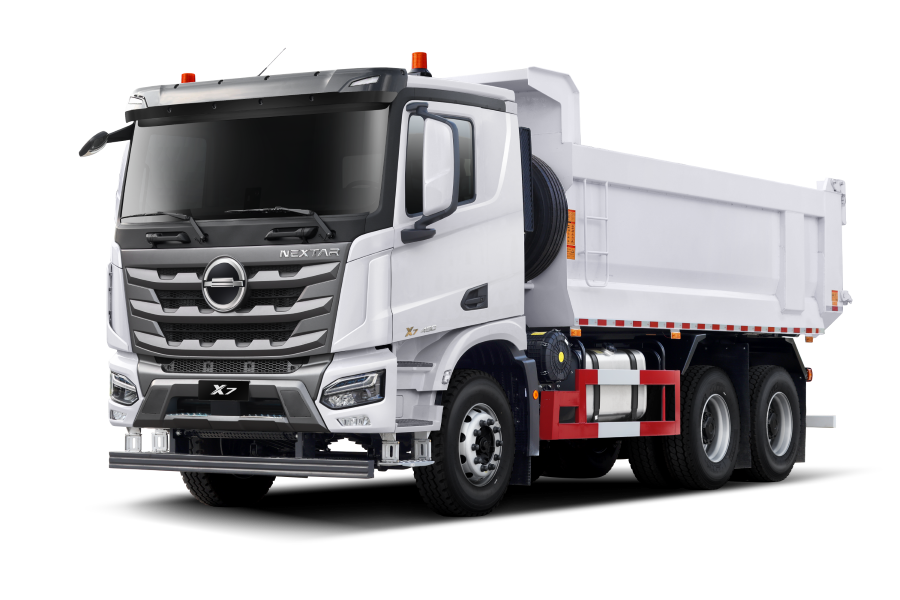
Understanding Dump Truck Load Capacity and Tonnage Ranges
Dump truck operators must first grasp two critical metrics: payload capacity (maximum cargo weight) and gross vehicle weight rating (GVWR), which includes the truck’s own weight. Standard single-axle models typically handle 10–15 tons, while articulated dump trucks with reinforced frames support 25–40 tons due to their multi-axle configurations.
Payload Capacity and Gross Vehicle Weight Rating (GVWR) Explained
GVWR represents the total permissible weight (vehicle + cargo), while payload capacity deducts the truck’s empty weight. For example, a tandem-axle dump truck with a 25-ton GVWR might have a 16-ton payload limit after accounting for its 9-ton chassis.
Calculation of Capacity in Cubic Yards and Tons for Common Dump Truck Types
Material density determines cubic yard-to-ton conversions:
- Sand/gravel: 1.3–1.5 tons per cubic yard
-
Crushed stone: 1.5–2 tons per cubic yard
A standard 14-cubic-yard tri-axle truck carries ≈21 tons of gravel (14 yd³ × 1.5 tons).
Factors Influencing Dump Truck Capacity: Axle Count, Size, and Legal Weight Limits
Industry studies confirm tri-axle configurations increase legal load limits by 35% compared to dual-axle systems. However, state bridge laws often cap total weights at 20–25 tons regardless of axle count to protect infrastructure.
Comparative Analysis of Standard vs. Articulated Dump Truck Tonnage Ranges
Articulated models outperform standard rigid-frame trucks in rough terrain while maintaining higher capacities:
| Feature | Standard Dump Truck | Articulated Dump Truck |
|---|---|---|
| Avg. Tonnage Capacity | 10–20 tons | 25–40 tons |
| Turning Radius | 45–60 feet | 25–35 feet |
| Terrain Adaptability | Moderate | High |
This flexibility explains why 62% of mining operations now deploy articulated trucks for heavy-material transport.
Engineered for Endurance: Dump Truck Durability and Material Strength
Results from independent durability tests on steel and aluminum dump truck bodies
Recent field tests on mining and quarry operations reveal steel dump bodies withstand abrasive materials 37% longer than aluminum alternatives before requiring repairs. While aluminum reduces vehicle weight by 15–20%, steel maintains structural integrity through 12,000+ load cycles in standardized stress simulations.
Body construction materials: steel, aluminum, and composite trade-offs
- Steel: 8–12% higher initial cost vs. aluminum, but 40% lower lifetime maintenance expenses
- Aluminum: Enables 5–7% fuel efficiency gains but shows three times faster fatigue crack development in subzero temperatures
- Composite: Emerging alternative with 18% weight reduction over steel, yet lacks performance data beyond five-year benchmarks
Industry paradox: lighter materials vs. long-term structural fatigue
Construction fleets report 23% higher replacement rates for aluminum-body trucks after eight years despite annual fuel savings of $8,500. This creates a breakeven dilemma—weight savings rarely offset premature body replacements costing $42,000–$65,000 per unit.
Maximizing Payload Efficiency While Preventing Overload Risks
Calculating Payload Capacity Accurately to Avoid Overloading Penalties
Getting the payload right means knowing exactly what each truck can carry based on its GVWR and the materials being transported. Most tandem axle dump trucks will handle somewhere between 13 to 16 tons before they're pushing their limits. Going even 5% over that limit? Well, studies from NHTSA back in 2023 showed it actually raises the chance of brake failure by nearly 18%. That's why many modern fleet managers have started installing those smart weighing systems inside their trucks. These gadgets constantly update the estimated load depending on whether it's wet gravel or dry sand, for instance. Looking at the latest numbers from the Transportation Compliance folks in 2024, companies that follow these digital guidelines end up getting hit with about 63% fewer overweight tickets each year than those still doing calculations with pen and paper.
Weight Distribution and Overload Prevention Strategies in Real-World Operations
Three key strategies optimize payload efficiency without compromising safety:
- Axle-Specific Loading: Distribute 60% of weight over rear axles for standard dump trucks
- Pre-Trip Material Testing: Verify aggregate density onsite using nuclear density gauges
- Slope Compensation: Reduce maximum payload by 8–12% when operating on ≥10° inclines
Case Study: Fleet Reduction Due to Repeated Overloading Violations
A regional fleet operator reduced its 42-dump-truck fleet to 29 vehicles after incurring $287,000 in overweight citations over 18 months. Post-audit data revealed improper bedliner installations caused consistent 9–11% payload overestimates, emphasizing the need for integrated weight monitoring solutions.
Ensuring Operational Safety and Effective Load Securement
Dump Truck Safety During Loading and Unloading: Protocols and Best Practices
Adherence to safety protocols reduces dump truck accidents by 62% during loading/unloading cycles (Industrial Safety Journal 2023). Operators must follow three critical practices:
- Conduct pre-trip inspections of hydraulic lifts and tailgate locks
- Maintain a 15 ft exclusion zone during tipping operations
- Use spotter signals when reversing near uneven terrain
Compliance with OSHA load securement standards ensures proper weight distribution, preventing dangerous load shifts. A 2022 fleet study found operators using standardized checklists reduced equipment-damage incidents by 41%.
The Role of Bedliner Utilization in Truck Bed Protection and Load Control
Modern spray-on polyurethane bedliners demonstrate 37% greater abrasion resistance than traditional rubber mats in controlled trials. Key benefits include:
| Feature | Impact |
|---|---|
| Non-slip surface | Reduces load shifting by 29% |
| Corrosion resistance | Extends dump body lifespan by 8–12 years |
| Weight efficiency | Adds only 120–180 lbs vs. steel alternatives |
Operators report 22% fewer unplanned maintenance stops when combining bedliners with automated load monitoring systems. This dual approach optimizes payload security while meeting stringent safety regulations.
Hydraulic System Reliability and Maintenance for Heavy-Duty Performance
Hydraulic system performance under heavy-duty cycles: failure points and fixes
Today's dump trucks depend heavily on hydraulic systems to handle those massive loads, sometimes as much as 40 tons worth of material. But all that constant lifting takes its toll on certain parts. According to field observations, piston seals account for around 35% of breakdowns while hoses come in second at about 27%. These components just can't stand up to the same amount of pressure over and over again. Another big problem comes from dirty hydraulic fluid. The latest industry data from 2023 shows that nearly two thirds of early pump failures happen when particles get into the system beyond what's considered acceptable according to standard measurements. Keeping fluids clean isn't just good practice it's practically essential for avoiding costly repairs down the road.
Daily mechanical inspection and maintenance routines to extend system life
- Fluid level verification using dipstick markers
- Hose inspection for cracks exceeding 0.8mm depth
- Reservoir temperature monitoring (ideal range: 120–140°F)
Leading equipment providers recommend adherence to OEM maintenance schedules to maintain warranty compliance and avoid $5,000+ repair incidents.
Trend analysis: predictive maintenance adoption in modern dump truck fleets
Things are changing in the industry as companies move away from fixing problems after they happen toward predicting issues before they occur. According to recent data from NTA (2023), nearly nine out of ten fleet managers noticed fewer hydraulic system breakdowns once they started using those IoT sensors. What makes these smart systems so effective? They can pick up on subtle signs like unusual vibrations and changes in how fluids behave weeks before anything actually breaks down. Take Hydro Tech for instance their maintenance program that went live last year saw components lasting almost a quarter longer on average. The secret sauce? Real time warnings when contaminants show up in the system plus constant monitoring of pressure trends that would have gone unnoticed otherwise.
FAQs
What is the average load capacity of a standard dump truck?
Standard dump trucks generally have a load capacity ranging from 10 to 20 tons, depending on the model and configuration.
Why are articulated dump trucks preferred in mining operations?
Articulated dump trucks are favored in mining due to their superior terrain adaptability and higher tonnage capacities, typically ranging from 25 to 40 tons.
What are the major factors affecting dump truck capacity?
Dump truck capacity is influenced by axle count, vehicle size, and legal weight limits imposed by regulations.
What are some common materials used in dump truck body construction?
Dump truck bodies are often constructed from steel, aluminum, or composite materials, each with unique advantages and trade-offs.
How does hydraulic system maintenance impact dump truck performance?
Regular maintenance and inspections of hydraulic systems ensure reliability and prevent costly repairs due to breakdowns.
Table of Contents
- Understanding Dump Truck Load Capacity and Tonnage Ranges
- Engineered for Endurance: Dump Truck Durability and Material Strength
- Maximizing Payload Efficiency While Preventing Overload Risks
- Ensuring Operational Safety and Effective Load Securement
- Hydraulic System Reliability and Maintenance for Heavy-Duty Performance
-
FAQs
- What is the average load capacity of a standard dump truck?
- Why are articulated dump trucks preferred in mining operations?
- What are the major factors affecting dump truck capacity?
- What are some common materials used in dump truck body construction?
- How does hydraulic system maintenance impact dump truck performance?