 EN
EN

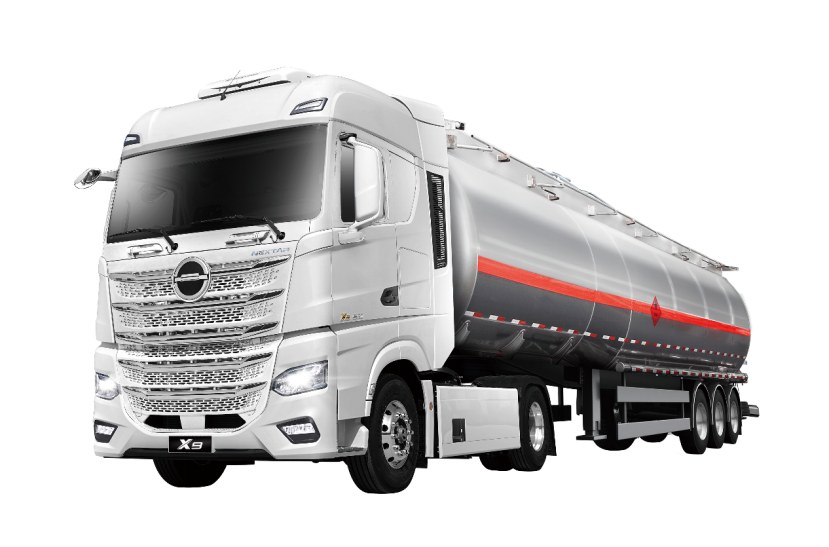
Core Tanker Applications by Industry Segment
Fuel, Chemical, and Edible Oil Transport: Compliance, Safety, and Material Compatibility
Modern tankers hauling petroleum, chemicals, or edible oils must comply with stringent regulatory frameworks—including ADR in Europe and DOT standards in the U.S.—to ensure safety, environmental protection, and cargo integrity. Fuel tankers commonly use carbon steel or aluminum tanks with multiple compartments, integrated anti-static grounding, and overflow prevention systems to support flexible loading and reduce ignition risks. For corrosive or reactive chemicals, linings such as ETFE, vulcanized rubber, or 316L stainless steel provide essential resistance to acids, solvents, and caustics—preventing degradation, leaks, and cross-contamination. Edible oil transport requires food-grade 316 stainless steel construction and validated cleaning protocols aligned with FDA and GMP requirements, ensuring no residual contaminants compromise product safety.
Dairy and Potable Water Delivery: Sanitary Design, Temperature Control, and Traceability
Dairy and potable water tankers demand full sanitary compliance—not just material selection but holistic system design. Smooth-welded, electropolished 316 stainless steel interiors eliminate crevices where bacteria can accumulate, while insulation and optional refrigeration maintain strict temperature bands (e.g., ≤4°C for raw milk) throughout transit. Potable water tanks are fully sealed against ambient contamination and equipped with sanitary vents, tri-clamp manholes, and NSF/ANSI 61–certified seals. Integrated traceability—via RFID-tagged cleaning logs or digital audit trails—records every sanitation cycle, fill event, and temperature deviation, directly supporting HACCP plans and regulatory inspections.
Hot Asphalt and Construction Slurry Transport: Thermal Integrity and On‑Site Discharge Efficiency
Transporting hot asphalt or cement-based slurries requires engineering focused on thermal retention and rapid, controlled unloading. Double-wall insulated tanks with integrated heating jackets—often using steam, electric, or thermal oil systems—maintain asphalt above 135°C over extended hauls, preventing viscosity spikes that hinder paving. Slurry tankers prioritize abrasion-resistant linings (e.g., polyurethane or ceramic-reinforced coatings) and heavy-duty rear- or bottom-discharge valves capable of handling aggregate-laden mixtures without clogging or wear. Efficient discharge—often completed in under 90 seconds—keeps pavers and pumps operating continuously, reducing labor downtime and minimizing material waste due to cooling or segregation.
Structural and Configurational Advantages of Modern Tanker Trucks
Enhanced Stability and Safety via Low Center of Gravity, Bulkheads, and Baffle Systems
Stability in liquid transport hinges on controlling dynamic forces—and modern tankers achieve this through three interlocking design principles. A deliberately low center of gravity lowers the vehicle’s tipping threshold, especially critical during high-speed cornering or evasive maneuvers. Internal bulkheads divide the tank into discrete compartments, physically limiting lateral and longitudinal surge. Baffle systems—featuring perforated plates or radial vanes—further dampen fluid motion by forcing cargo to flow through controlled channels, reducing peak surge forces by up to 70% compared to smoothbore designs. Together, these features significantly lower rollover risk and improve driver control, particularly on rural roads or during emergency braking.
| Feature | Function | Safety Benefit |
|---|---|---|
| Bulkheads | Divide tank into compartments | Limits liquid movement, improves balance |
| Baffle systems | Perforated plates interrupt surge | Reduces sloshing, enhances control |
| Low center of gravity | Design lowers weight mass | Lowers tipping probability |
Three-Axis Tanker Configuration: Optimized Load Distribution, Road Compliance, and Urban Maneuverability
The three-axle configuration remains the industry standard for medium-to-heavy regional tanker operations because it balances payload efficiency, legal compliance, and real-world drivability. By distributing gross vehicle weight across three axles—including a lift axle when needed—it ensures adherence to national axle load limits (e.g., ≤12,000 kg per tandem axle in EU regulations), reduces road wear, and extends tire and suspension life. The layout also improves traction and braking stability at full capacity. Crucially, its compact wheelbase and optimized turning radius allow reliable access to urban depots, construction sites, and rural dairy farms—without requiring special permits or oversized vehicle routing. This versatility makes it ideal for mixed-duty cycles involving highway legs and frequent last-mile stops.
Critical Safety and Operational Advantages for Hazardous and Sensitive Cargoes
Explosion Mitigation, Fire Resistance, and Spill Containment in Hazardous Tanker Operations
Hazardous material tankers deploy layered engineering controls to mitigate explosion, fire, and spill risks—each aligned with NFPA 58, ISO 10414, and UN Model Regulations. Pressure relief valves and rupture discs automatically vent excess vapor during thermal expansion or external fire exposure, preventing catastrophic tank failure. Fire resistance is enhanced through ceramic fiber insulation and intumescent coatings that delay heat penetration for ≥30 minutes—buying critical time for evacuation or intervention. Spill containment relies on double-walled construction with leak-detection interstices, plus redundant sealing at manways, valves, and piping interfaces. Real-time monitoring systems integrate pressure transducers, vapor sensors, and GPS-triggered alerts to notify dispatch centers of anomalies before they escalate—reducing incident severity and supporting rapid emergency response.
FAQ
What are the primary materials used in fuel tankers?
Fuel tankers often consist of carbon steel or aluminum with multiple compartments, integrated anti-static grounding, and overflow prevention systems.
Why do dairy tankers use smooth-welded stainless steel interiors?
Smooth-welded, electropolished 316 stainless steel interiors eliminate crevices where bacteria might accumulate, ensuring sanitary conditions during transportation.
How do tanker trucks manage thermal retention for hot asphalt?
Hot asphalt tankers utilize double-wall insulated tanks with integrated heating jackets to maintain required temperatures above 135°C over long hauls.
What safety benefits do baffle systems provide in tankers?
Baffle systems reduce liquid sloshing by interrupting fluid motion, which lowers peak surge forces by up to 70% and improves vehicle stability.
How do spill containment systems in tankers work?
Spill containment systems employ double-walled construction with leak-detection interstices and redundant sealing to prevent leaks and contain hazardous materials effectively.