 EN

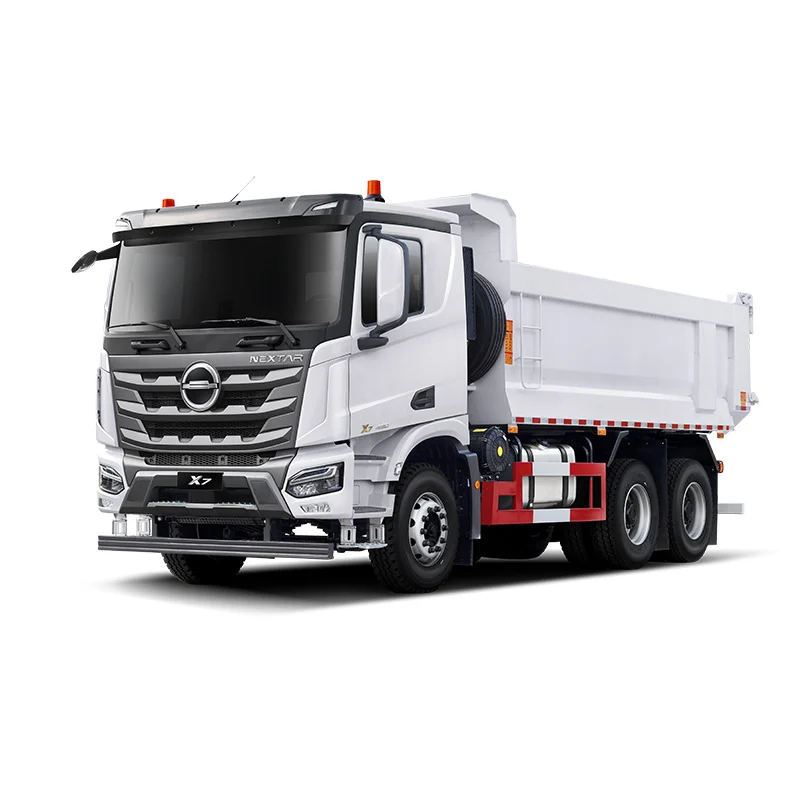
Why Tractor Reliability Directly Drives Cross-Border Fleet ROI
Uptime over horsepower: How 99.2% operational availability cuts transit delays in EU–Asia corridors
In cross-border long-haul transport, resilience trumps raw power. A tractor achieving 99.2% operational availability loses fewer than three days a year to unscheduled downtime—keeping trailers moving along 8,000-km EU–Asia corridors and avoiding detention charges and missed delivery windows that erode margins. According to a 2024 European fleet benchmarking study, carriers with availability above 99% reported 12% fewer late deliveries and a 9% improvement in on-time performance versus fleets averaging 97%. This level of uptime eliminates the need for costly buffer stock and emergency re-routing, lifting load-to-driver ratios and per-trip revenue. For cross-border operators, uptime is not a maintenance metric—it’s the foundation of predictable cash flow and service reliability.
Field-proven reliability benchmarks: Leading European tractor models’ failure rates (2020–2024)
Aggregated warranty data from a global fleet service provider (2020–2024) shows three leading European heavy-duty tractor series maintained major component failure rates between 0.8 and 1.2 per 100,000 miles. These models demonstrated statistically identical durability across typical five-year ownership cycles. Failures were concentrated in emission-control and electrical subsystems—not core powertrain elements, which remained below 0.3 incidents per 100,000 miles. This consistency stems from mature Euro VI-era technologies: common-rail fuel systems, automated manual transmissions, and modular aftertreatment designs. Fleet managers can use these benchmarks to compare against their own kilometre-based failure tracking—identifying outliers before they degrade availability. Long-haul routes impose extreme thermal and vibration stress; these figures confirm that well-engineered platforms reliably pre-empt most in-service failures during the critical 0–500,000-km window.
The true cost of breakdowns: $14,200 average loss per incident — factoring repair, demurrage, and cargo liability
The ATRI Operational Costs of Trucking 2024 report finds that a single unscheduled roadside breakdown in long-haul trucking costs an average of $14,200 when repair, demurrage, cargo spoilage, and liability are combined. Repair and towing account for roughly $4,200; detention and demurrage penalties add $3,500; cargo claims and spoilage total $2,800; and driver downtime, repositioning, and administrative processing consume the remaining $3,700. Critically, these figures exclude long-term reputational damage—such as lost shipper trust and reduced contract renewal likelihood. A tractor showing signs of impending failure forces reactive spending that is 40% more expensive than planned preventive maintenance (McKinsey 2024). Poor reliability, therefore, directly depletes route profitability—not just through line-item repairs, but by undermining schedule integrity and commercial credibility.
Global Regulatory Compliance: Certifying Your Tractor for Multi-Jurisdictional Routes
Mandatory homologation frameworks: ECE R152 (safety), UNECE WP.29 (cybersecurity), and ASEAN NCAP (crashworthiness)
Operating a long-haul tractor across multiple trade blocs demands strict adherence to regional homologation mandates. UN ECE R152, governing Advanced Emergency Braking Systems (AEBS) for N3-category vehicles, is among the most critical—its performance thresholds reduce rear-end collisions by up to 38% and are already enforced by 47 contracting parties. Meanwhile, the UNECE WP.29 framework introduced binding cybersecurity rules: Regulation R155 for vehicle-level cyber resilience and R156 for over-the-air software updates, both fully effective for new heavy-vehicle types from July 2024. These safeguards prevent telematics hijacking and protect cargo manifest data during border clearance. In Southeast Asia, ASEAN NCAP sets crashworthiness benchmarks—assessing structural integrity, occupant protection, and safety-assist features—where low ratings can delay import clearance. A single missing certificate can immobilize a tractor at a border for days, triggering demurrage and missed-delivery penalties. Selecting a tractor shipped with integrated documentation for all three frameworks transforms regulatory compliance from a bottleneck into a seamless, multi-jurisdictional advantage.
Smart Tractor Selection: Telematics, Predictive Maintenance, and Border-Ready Connectivity
Modern long-haul fleets rely on more than horsepower—they demand intelligence. Integrating advanced telematics, predictive maintenance, and connectivity directly into tractor selection reduces operational friction and strengthens supply chain resilience. Two technologies now define that edge: SAE J1939 for proactive service management and e-TCU for seamless border compliance.
SAE J1939–enabled predictive maintenance: Reducing unscheduled tractor downtime by 37% (McKinsey 2024)
The SAE J1939 standard provides a unified communication protocol across heavy-duty vehicle electronic control units. By leveraging this built-in data stream, operators gain continuous insight into engine parameters, transmission health, and braking system wear—without installing additional sensors. Predictive algorithms analyse real-time patterns to flag early signs of component fatigue. As confirmed by McKinsey (2024), fleets using SAE J1939–driven predictive maintenance cut unscheduled tractor downtime by 37%. Instead of reacting to roadside failures, teams schedule targeted interventions during planned stops—preserving cross-border schedules, extending component life, and lowering emergency repair costs. For a tractor hauling goods from Rotterdam to Shanghai, even one avoided breakdown preserves cargo integrity and avoids demurrage fees that directly erode margins. Its open architecture also simplifies fleet-wide integration, enabling a single dashboard to monitor mixed-make operations across continents.
e-TCU–integrated border readiness: Real-time customs document validation and regulatory compliance alerts
An electronic Tractor Control Unit (e-TCU) does more than track position—it serves as a compliance gateway. When integrated with telematics, the e-TCU validates digital customs documents against real-time shipment status and cross-references regional regulatory requirements. As the tractor approaches a border, the system proactively alerts drivers and dispatchers to missing forms, expiring certificates, or updated entry rules—eliminating manual checks and reducing inspection delays. This always-on connectivity transforms potentially hours-long queues into predictable, paperless crossings—ensuring continuity across complex, multi-jurisdictional corridors.

FAQs
What is the importance of uptime for cross-border fleet operations?
High uptime directly impacts cash flow, service reliability, and overall profitability. A tractor with 99.2% operational availability minimizes downtime, avoids late deliveries, and reduces the need for costly buffer stock.
How does predictive maintenance reduce tractor downtime?
Predictive maintenance, enabled by technologies like SAE J1939, uses real-time data to identify component fatigue early, allowing fleets to schedule repairs proactively and avoid unscheduled breakdowns.
Why is regulatory compliance crucial for long-haul tractors?
Compliance ensures tractors meet multi-jurisdictional requirements, avoiding border delays, demurrage charges, and penalties while ensuring continuity in international operations.
What technologies support cross-border fleet operations?
Technologies such as SAE J1939 and e-TCU enhance predictive maintenance and streamline regulatory compliance processes, reducing delays and ensuring operational efficiency.
Table of Contents
-
Why Tractor Reliability Directly Drives Cross-Border Fleet ROI
- Uptime over horsepower: How 99.2% operational availability cuts transit delays in EU–Asia corridors
- Field-proven reliability benchmarks: Leading European tractor models’ failure rates (2020–2024)
- The true cost of breakdowns: $14,200 average loss per incident — factoring repair, demurrage, and cargo liability
- Global Regulatory Compliance: Certifying Your Tractor for Multi-Jurisdictional Routes
- Smart Tractor Selection: Telematics, Predictive Maintenance, and Border-Ready Connectivity
- FAQs